Decathlon case: from used retail baskets to a circular, cost-efficient solution
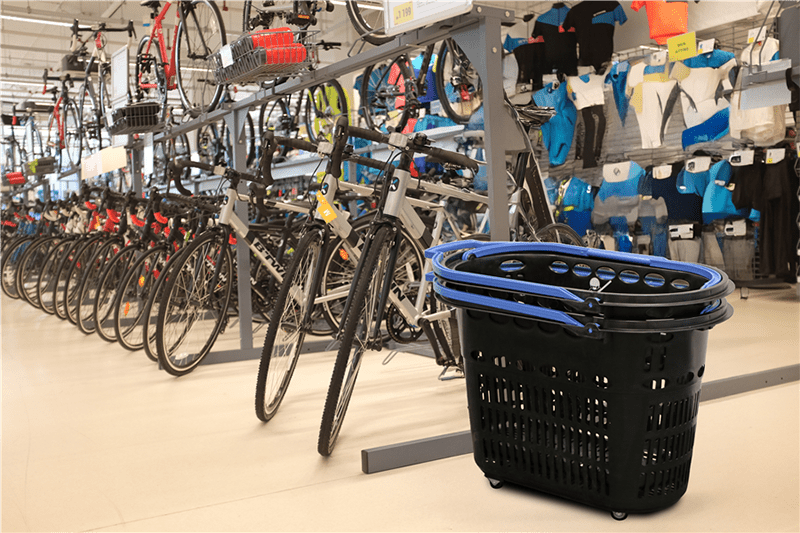
When Decathlon set out to replace its in-store shopping baskets, the objective went beyond a simple product update. The question was how to reduce cost while improving sustainability, without compromising performance in a high-traffic retail environment.
DW Reusables was involved early to co-develop a solution that would work in practice, not just on paper.
Rethinking retail baskets for durability and circular use
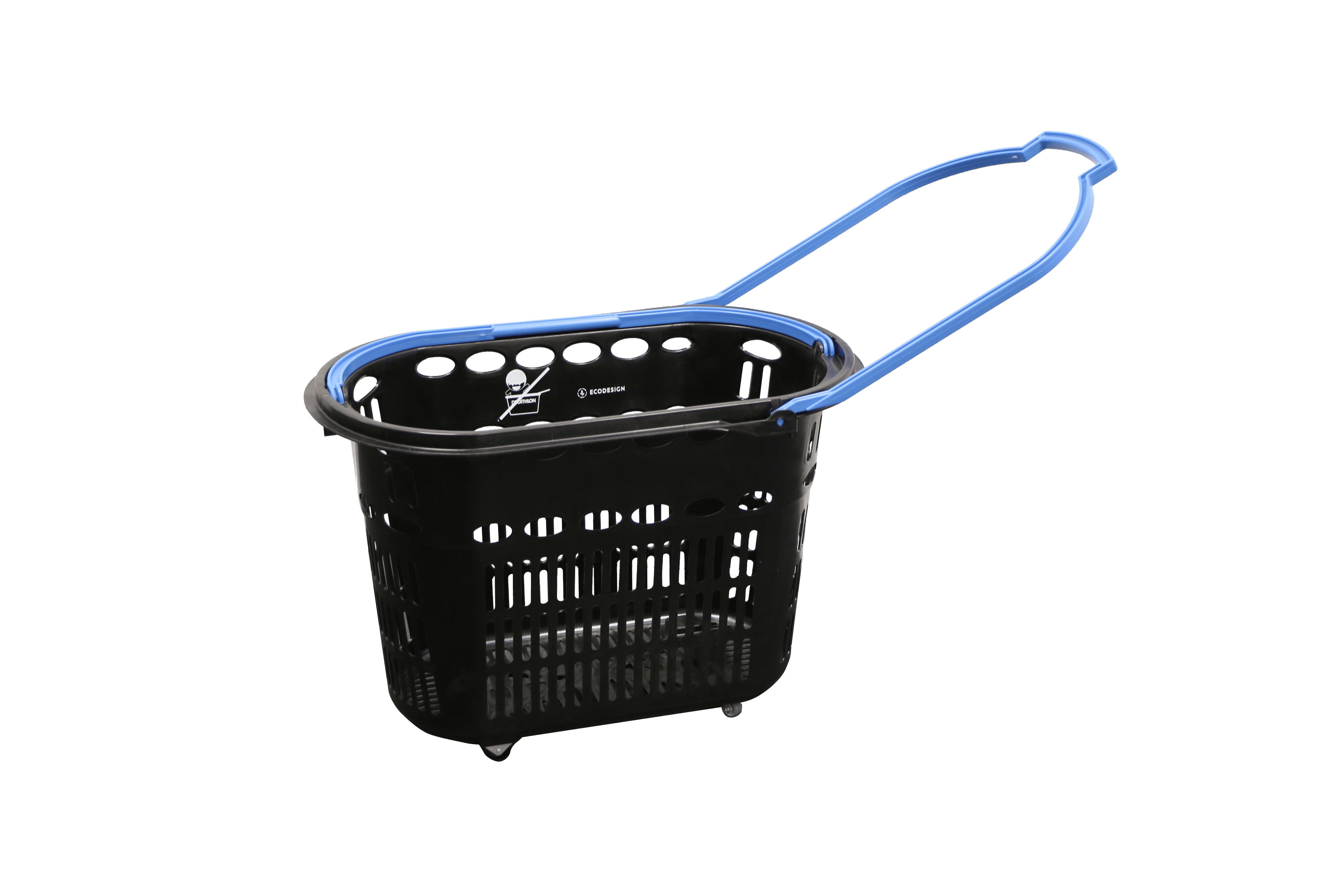
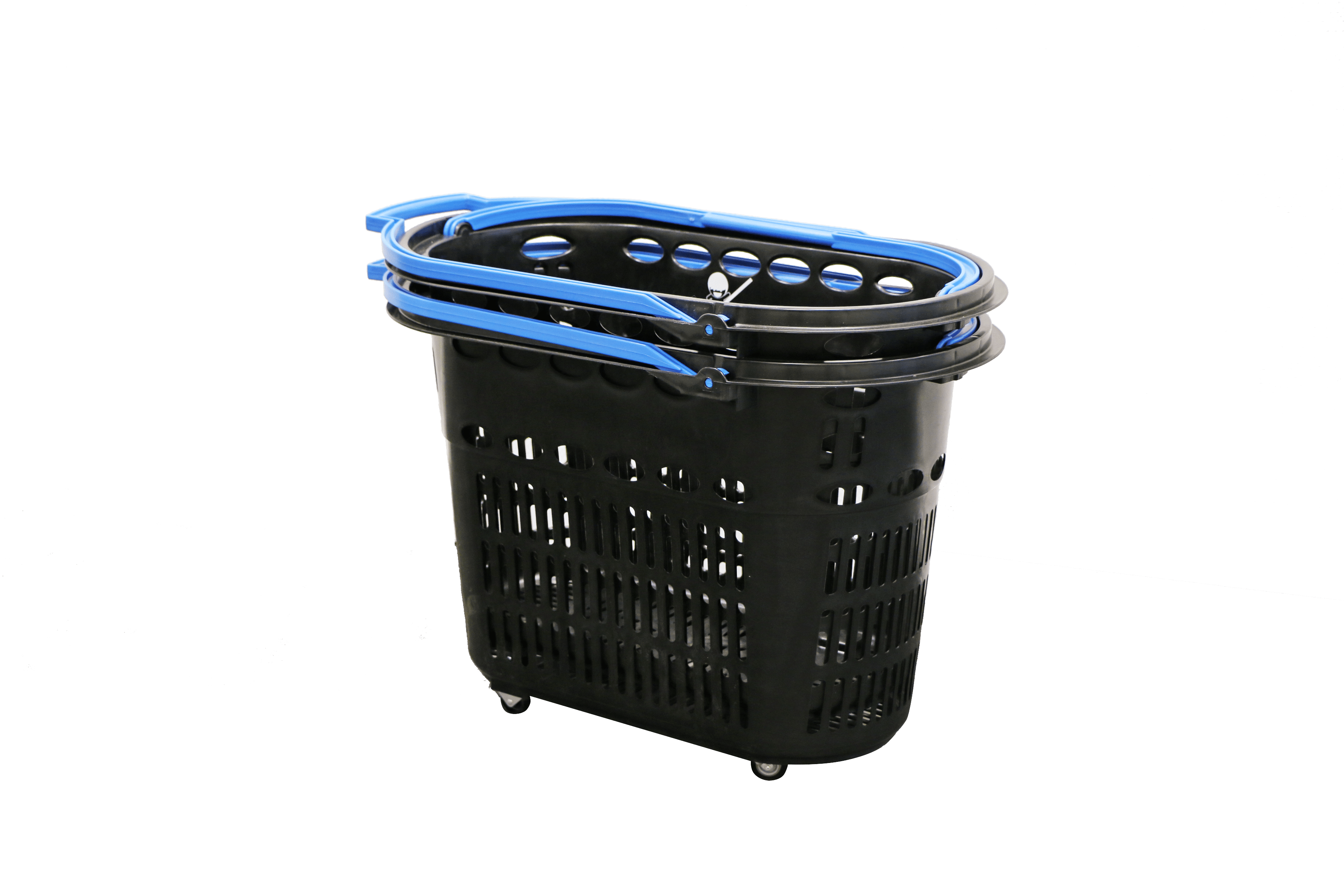
After years of intensive daily use across European stores, Decathlon’s iconic blue baskets were reaching the end of their lifecycle. Breakage due to heavy handling was increasing, leading to higher replacement rates and unnecessary material waste.
At the same time, Decathlon wanted to take a clear step forward in circular packaging. The new baskets needed to be more cost-efficient, more sustainable, and at least as robust as the original design.
This combination of requirements is where standard solutions typically fall short.
A co-design approach focused on real-world performance
Rather than starting from scratch, we began by analysing how the existing baskets were used across the retail environment. This allowed us to identify where failures occurred and where improvements would have the biggest operational impact.
Our in-house design team simplified key components such as handles and clips, reducing structural complexity while improving strength. The result was a more robust design with fewer weak points, leading to a longer lifespan under daily use.
At the same time, we rethought the material flow. The old baskets were collected, reground into recycled PP pellets, and reintegrated into the production of the new baskets. This closed-loop approach reduced raw material dependency and directly lowered production costs.
The shift to a black basket was a deliberate choice. It ensures consistent quality when working with recycled plastic and supports large-scale circular production.
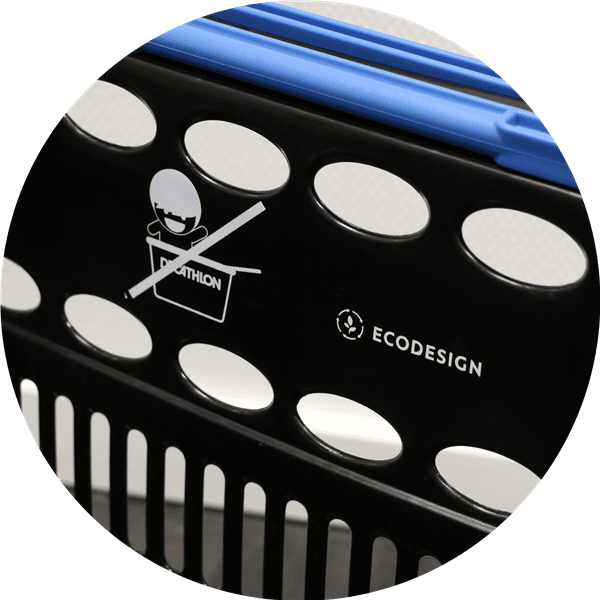
To make the sustainability effort visible without overstatement, an embossed eco-label was integrated into the design, while the Decathlon logo was applied via screen printing for clear brand visibility in-store.
The result: lower cost, longer lifespan, reduced environmental impact
The final solution delivered measurable improvements across all key parameters.
By simplifying the design and reusing existing materials, Decathlon achieved a lower cost per basket while significantly extending product lifespan. The use of recycled PP reduced waste at source and enabled a fully recyclable product at the end of its life.
Operationally, the baskets remain easy to clean, durable in daily use, and consistent in large volumes. From a sustainability perspective, local European production helped reduce transport-related emissions and ensured reliable supply.
This is what circular packaging looks like when it is designed to perform in real operations.
Why this approach works
This project reflects how DW Reusables approaches reusable packaging solutions.
Instead of delivering off-the-shelf products, we co-design with our customers, combining design, engineering, and material expertise into one integrated process. By staying involved from concept through production, we ensure that solutions don’t just meet specifications, but actually work within the realities of your operation.
The result is not just a more sustainable product, but a packaging solution that performs better over time.
About Decathlon
Decathlon, founded in France in 1976, is the world’s largest sports retailer, with more than 1,600 stores across 69 countries. The company is known for making innovative, high-quality sports products accessible to a wide audience, with a growing focus on sustainability and circularity
Ready to improve your packaging performance?
We combine technical expertise, industry knowledge, and genuine collaboration to create reusable packaging solutions that perform in your operations today and evolve with your needs tomorrow.