When does a reusable plastic pallet make sense?
Exploring the role of durable plastic pallets in beverage logistics and why the right return system makes all the difference.
Reusable packaging doesn't stop at the crate
In beverage logistics, crates are only one part of the transport process.
Pallets play an equally important role in moving products between production facilities, distribution centres and customers.
While wooden pallets remain the established standard across much of Europe, reusable plastic pallets can offer an interesting alternative in specific logistics environments.
The key question is not whether plastic pallets are better than wooden pallets.
It's where a reusable plastic pallet can deliver operational value.
The return system makes the difference
In many European markets, pallet logistics are built around established exchange systems.
Standard wooden Euro pallets are widely accepted, exchanged and returned throughout the supply chain.
Introducing a different pallet type into this environment can create additional requirements for tracking, collection and return.
That's why reusable plastic pallets are not automatically the right choice for every operation.
However, the situation changes when a company operates within a controlled or closed-loop logistics system.
When pallets remain within an organised return network, their repeated use becomes easier to manage.
In these environments, plastic pallets can offer advantages such as consistent dimensions, resistance to moisture and reduced need for repairs associated with damaged wooden components.
A practical example: the Spanish market
DW Reusables' experience in Spain illustrates the importance of the logistics model.
In certain Spanish applications, customers operate with their own pallet systems rather than relying entirely on traditional pallet exchange networks.
This creates a different operational environment.
When companies can retain control over their pallets and organise their return, reusable plastic pallets become a more relevant option.
The potential value lies in repeated use, consistent handling and reduced dependence on replacing or repairing damaged wooden pallets.
The Spanish experience demonstrates that successful implementation depends not only on the pallet itself, but also on how it moves through the supply chain.
Designed for repeated handling
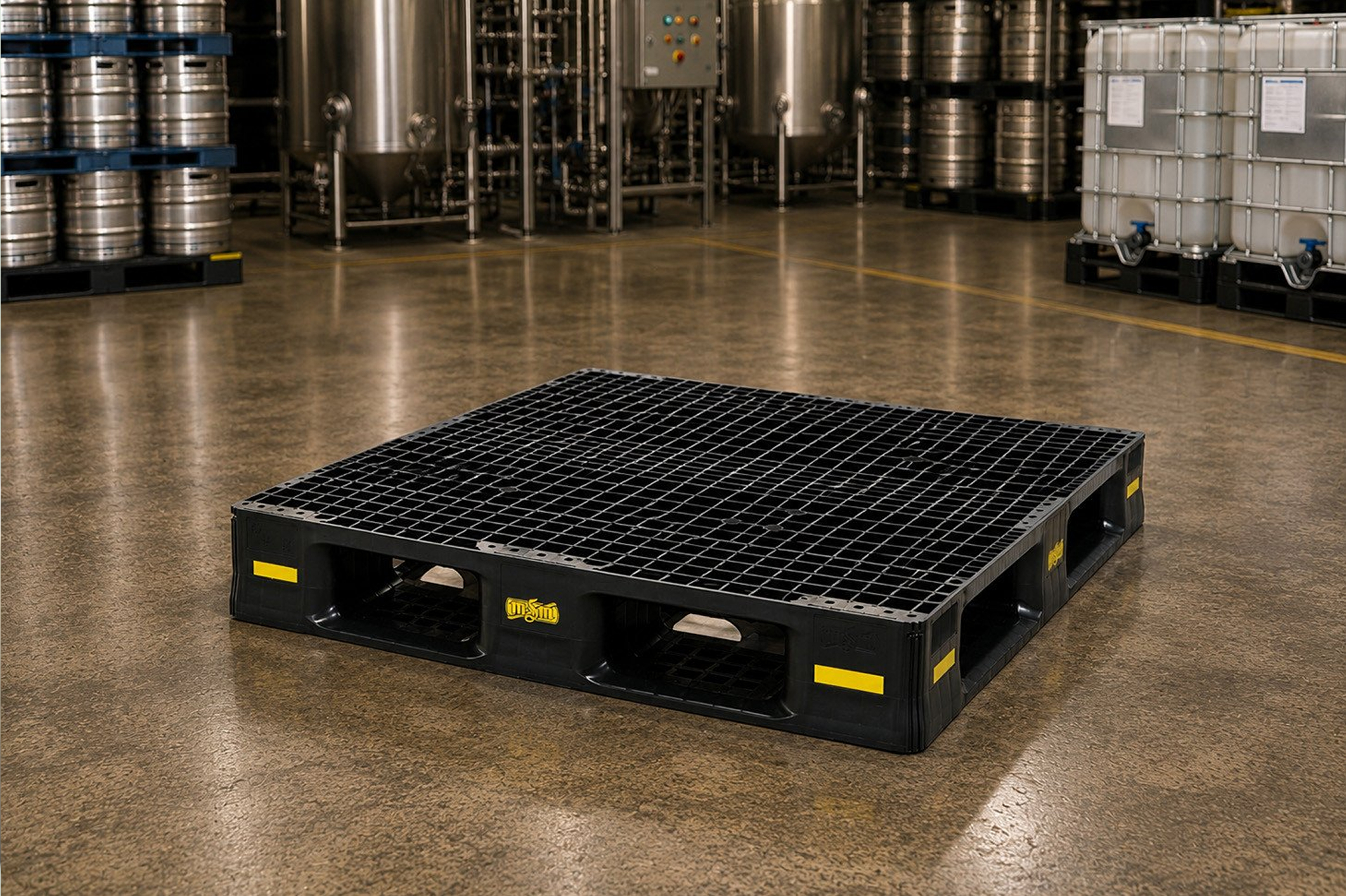
Reusable plastic pallets must withstand the demands of industrial transport.
Depending on the application, this can include repeated forklift handling, stacking, storage and movement through distribution environments.
DW Reusables combines product development and injection moulding expertise to manufacture plastic transport solutions suited to these operational requirements.
The focus is on durability, functionality and reliable performance throughout repeated use.
Finding the right application
Not every beverage producer needs to replace its existing pallet system.
For some operations, conventional wooden pallets remain the most practical choice.
For others, particularly those with controlled return flows, reusable plastic pallets may offer an opportunity to improve transport efficiency.
Understanding the logistics environment is therefore essential when evaluating their potential.
Let's discuss your transport operations at BrauBeviale
Are you operating a closed-loop logistics system or exploring alternatives for your transport equipment?
Meet DW Reusables at BrauBeviale 2026.
Our team would be happy to discuss where reusable plastic pallets could add value to your beverage operations.
CTA: Meet our team at BrauBeviale